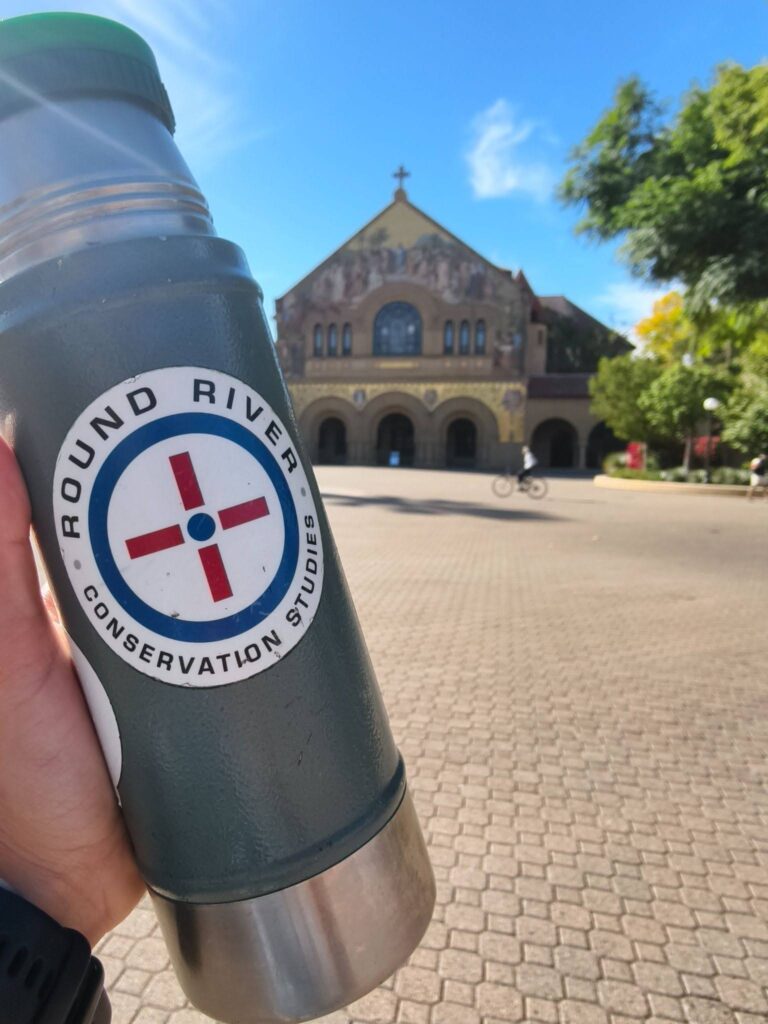
I can’t believe it has been over 7 years since my semester with Round River in Patagonia! Thinking back to that spring semester my junior year of undergrad, I never could have been convinced that in Fall 2026, I would be a new student (again) starting a PhD program at Stanford University. Here in the newly formed lab of Dr. Sebastian Heilpern, I am still hashing out the details of my project. Just a few days ago as I was going through my old text books and papers to decide what to bring to my new office, I found my old Grinnell journal entries from our field trips with RRCS. I had saved them all these years, imagining I would keep finding my way back to Patagonia.
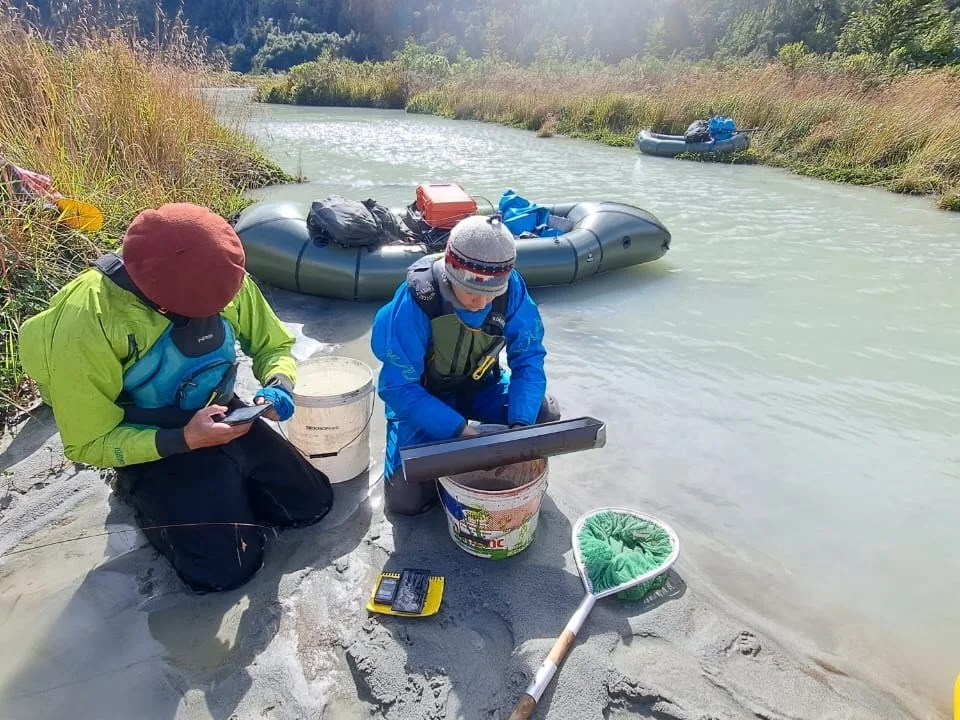
But this isn’t the first time I’ve managed to put myself in a position to be reunited with the roar of the Baker River and the winds of the pampas. Following my master’s work at West Virginia University, I was able to draw on my connections to the region and my research experience to obtain a Fulbright research grant, and spent 9 months back in the Aysén Region exploring the glacial rivers of the Northern Patagonia Icefield. During these expeditions, I had set out to understand the native biodiversity of fish assemblages in these rivers. Though I knew that invasive salmon and trout were widespread throughout the region, I was shocked to discover the extent to which this system was impacted by recreational and aquaculture fisheries.
This work left me with many more questions than answers. Enough so that when I was offered the chance to give up my research associate position in the PNW to be a grad student again, I had to take it. Though I have this first year to map out my objectives, I am thinking of exploring the interactions between aquaculture and biodiversity, to investigate the trade-offs between ecosystem function and food systems, and how we can work towards sustainable food systems that benefit local communities and the environment.
In the project development stage, I wonder where this new adventure will take me. Maybe I will again find myself in the town of Puerto Eden, where with my RRCS cohort, we learned about the dynamics of harmful algal blooms devastating the community’s fishing industry. Maybe I will be sharing maté with some pobladores in the Valle del Río Baker learning about how they supplement their diets with wild harvested salmon. Maybe I will end up somewhere completely unexpected, one of the great beauties of a research career.
One thing is certain, if I am in Cochrane, you can find me sitting on a bench in the Plaza de Armas with ice cream from cafe Rumbo al Baker, just like I was in 2019 with Team Chucao.