
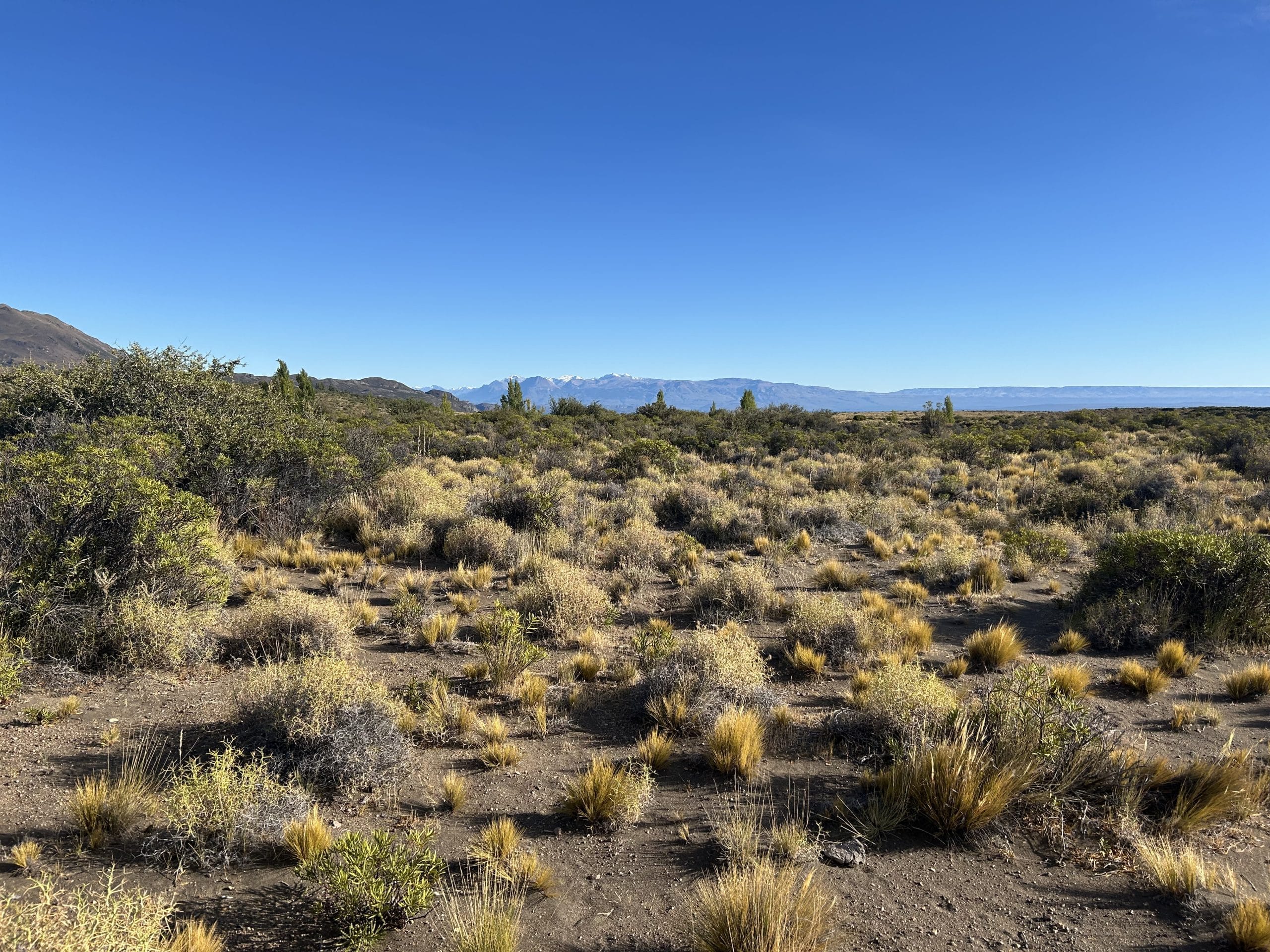
Photo above: The Patagonian steppe ecosystem in Chile Chico. Photo by M. Muller.
by Marcy Bucheit, Student Programs Assistant
A cold wind blows across a mosaic of grasses and shrubs dotting the rocky, dry steppe of Chile Chico, Chile. Yet despite the landscape’s harsh character, laughter and chatter carry through the air as a group of community members and students make their way across the terrain, pausing at intervals to bend down and examine something more closely. The steppe, it turns out, has a lot to offer those willing to read it…
This scene is at the heart of a new collaboration between Round River Patagonia and Chilean community organization, Raíces de Calafate. Together, they have launched Ecology of the Steppe: Biodiverse Classroom Laboratory, a participatory biodiversity monitoring project focused on the Patagonian steppe of Chile Chico. This ecosystem is far more than a windswept backdrop — it is a critical habitat for threatened and steppe-adapted species and contains wetlands that serve as essential biodiversity hotspots. At the same time, it is a vulnerable landscape, sensitive to land-use change, habitat degradation, and a shifting climate. Due to its ecological significance, it serves as a valuable focal point for further documentation and education. The project has already drawn local attention, as Round River and Raíces de Calafate were recently interviewed on Chile Chico’s community radio about the initiative, sharing more about the collaboration and objectives of their work.
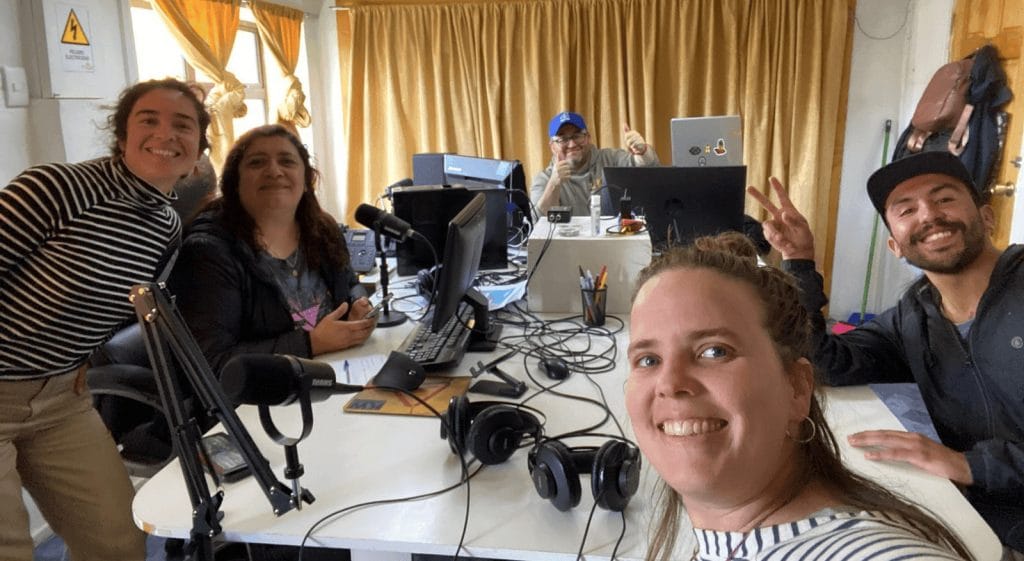
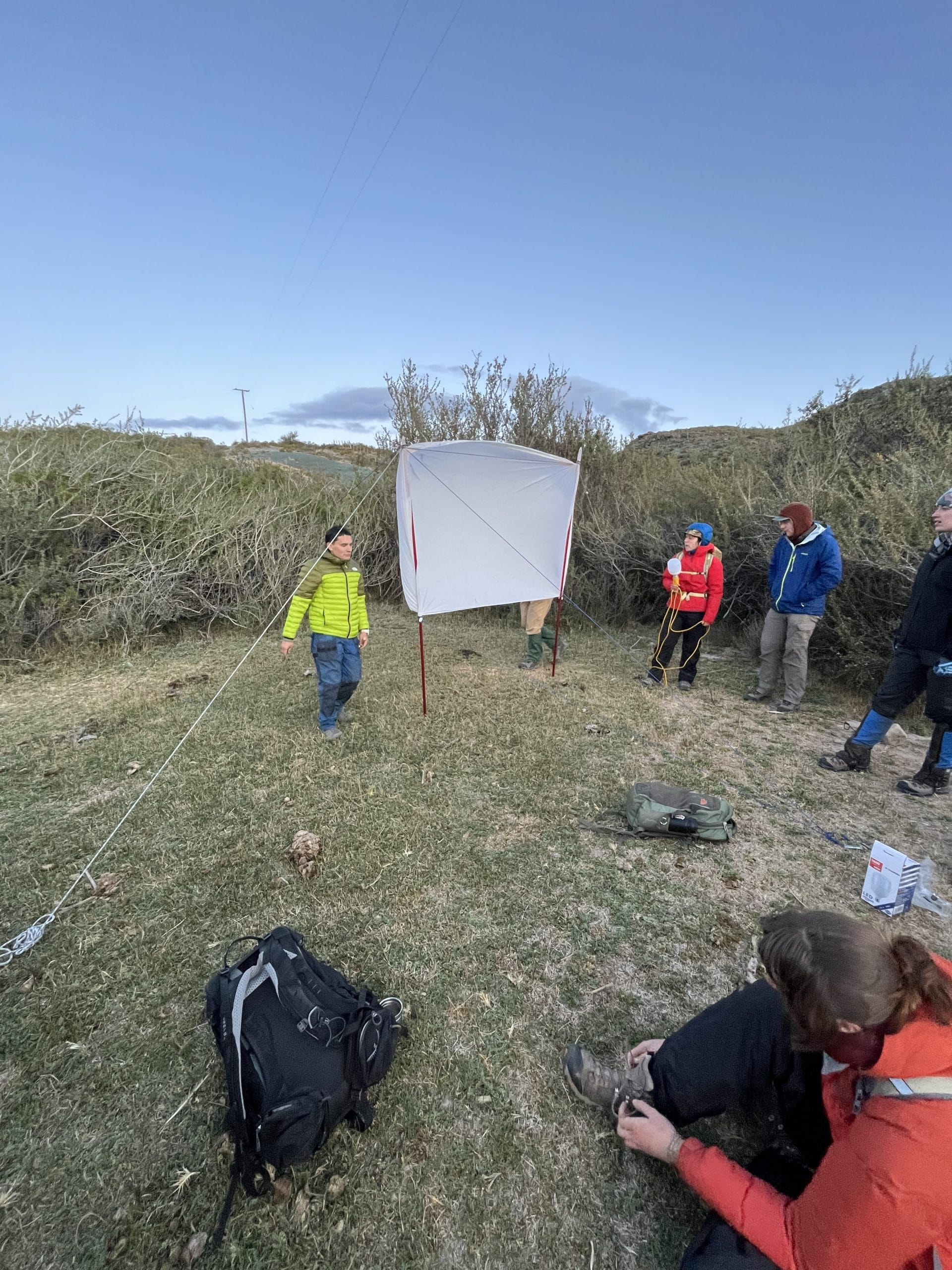
“So we [Round River] focus on developing methodologies and conducting field studies, and through that process we gather data that we later share with our partners… Now we’re also going to try to bring these studies—which sometimes seem a bit distant to the community—closer to them, so they can see that it’s actually not that far-removed, and that we can conduct research using simple tools like a winch, for example, a cup, a sheet, or a light. We can also go deeper to understand what’s present in the ecosystem. This information is extremely relevant because it helps the community itself learn about the species around us, their uses, and their importance.”
– Felipe Alegria, Patagonia Program Instructor (4:54)
Raíces de Calafate brings deep roots in education to this work. Founded in 2021, the community-based NGO develops non-formal, socio-environmental education programming in the Aysen region of Patagonia, partnering with children, families, and local organizations to strengthen community ties to the land and its biocultural heritage.
This semester, Round River students contributed to the project by leading a day of training with community members and local schoolchildren before spending three days conducting ecological surveys, walking biodiversity transects and recording every fauna, flora, and fungal species they encountered. Their work provides the scientific backbone of the project, ensuring that data collected by participants of all ages meets standards of methodological rigor and quality.
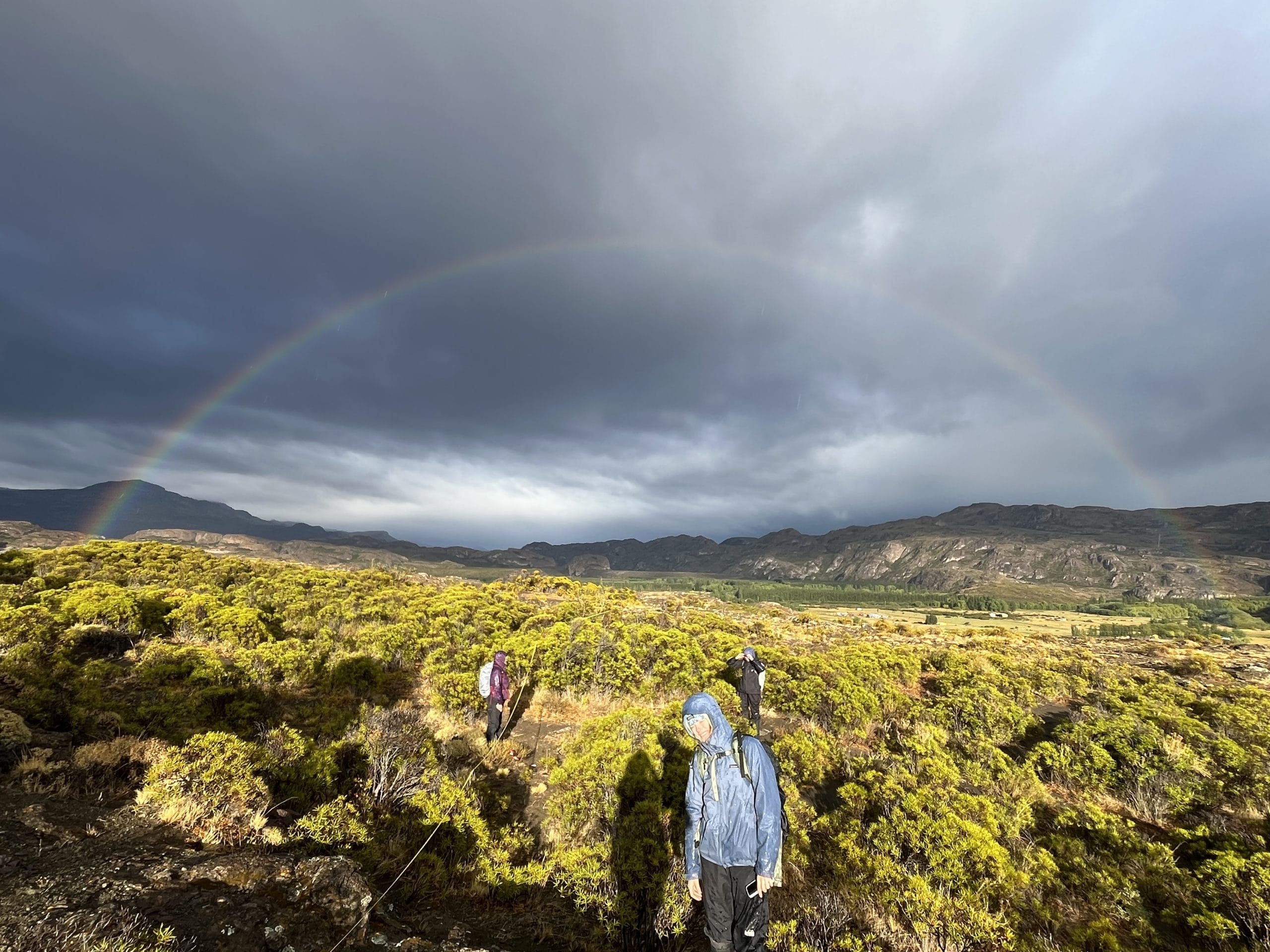
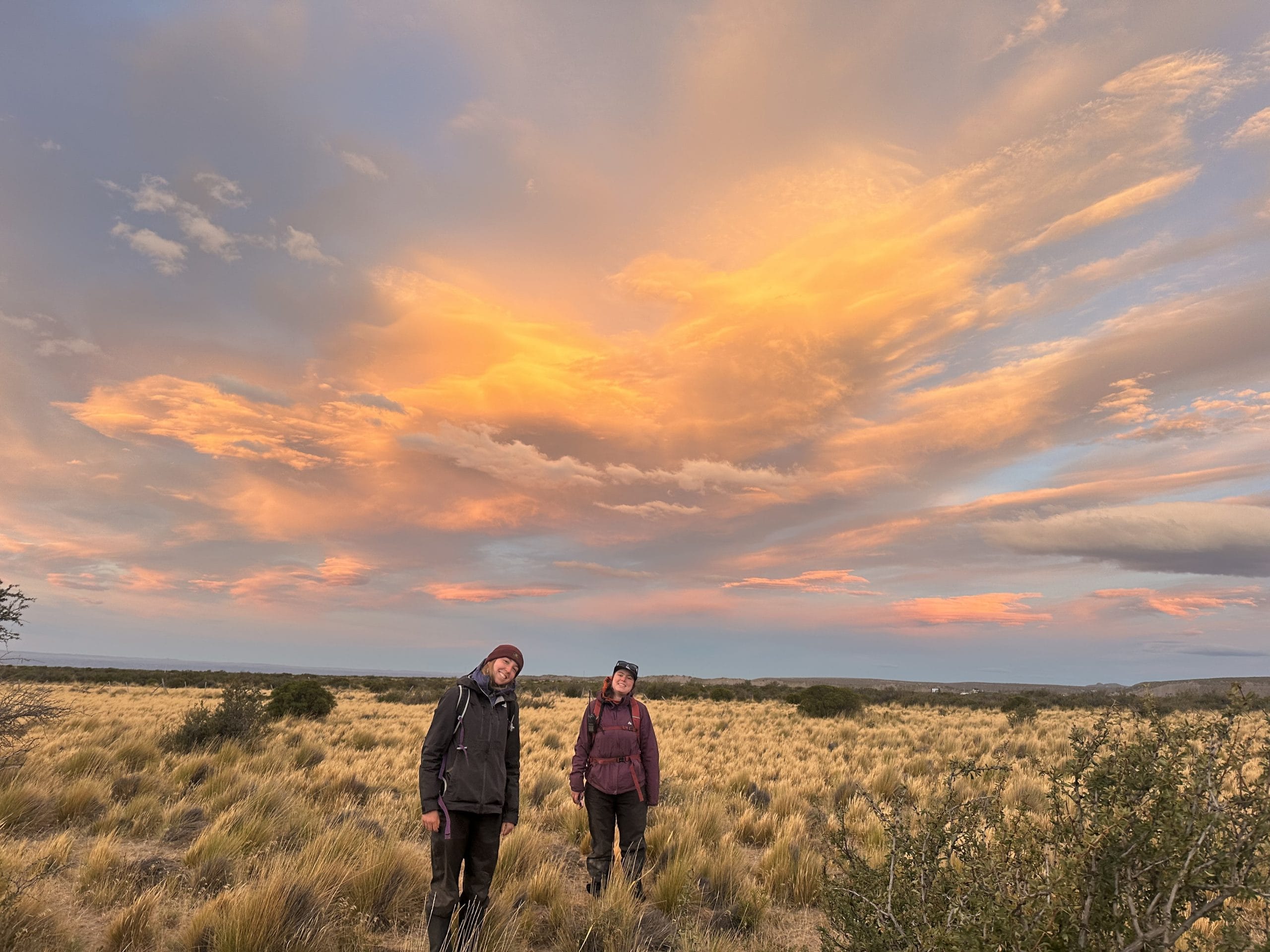
However, the project’s goals extend beyond data collection. Running through August 2026, the project will use this initial round of ecological monitoring to inform the development of educational materials that serve as a reference for teachers and the community. Additionally, the content will be used to educate teachers at the Chile Chico Elementary School and will become the basis for educational field trips to the steppe.
The project is supported by a grant from Fundación Mar Adentro, which funds interdisciplinary conservation and socio-ecological art-science initiatives across Chile. It marks the second collaboration Round River has developed under this fund, following a 2025 ethnobotanical garden installation at Cochrane Hospital, completed in partnership with Naturaleza Pública.
Learn more about our
Work in Chile
&
Patagonia Student Program