
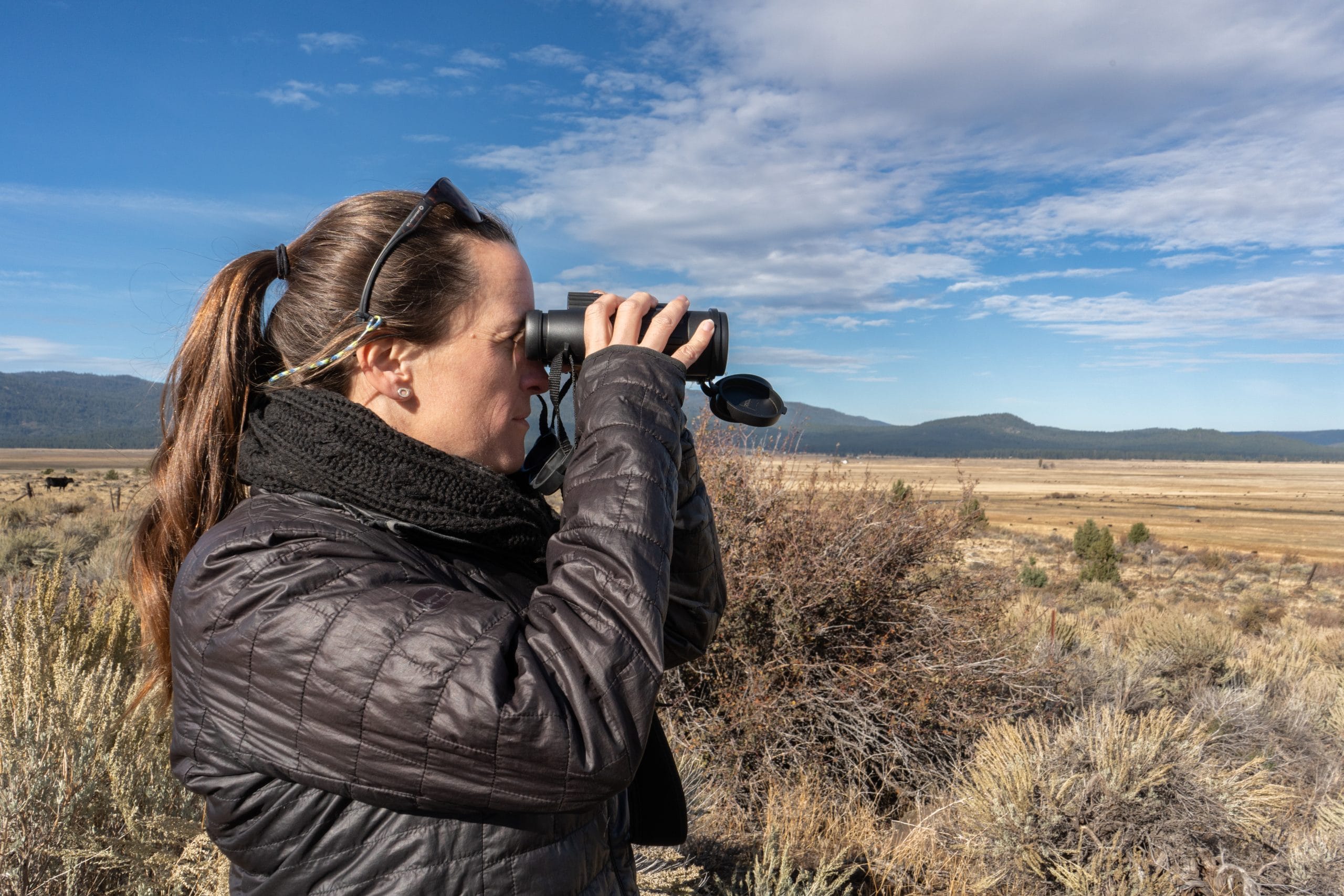
Photo credit (above): Malia Byrtus.
by Marcy Bucheit, Student Programs Assistant
Years of fieldwork have taught Dr. Kaggie Orrick a vital lesson: “shifting to plan F is not that crazy.” That adaptability — hard-won over a career spanning from sub-Saharan Africa to the Sierra Nevada west — remains a defining characteristic of her approach to conservation. It is also a skill that serves her well in her current position as Project Director with the California Wolf Project. Since the project’s inception in 2024, Orrick has been at the forefront of one of the most complex conservation questions facing California: how wolves and humans will share the landscape. This year, she was named a National Geographic Society Explorer and Grantee, a testament to the impact and importance of the initiative and her research.
Orrick began her academic career at Colby College, which is where she first connected with Round River as a student on the Namibia program in 2008. The experience was transformative and sparked her interest in sociological aspects of conservation as well as fieldwork in sub-Saharan Africa. After graduating, she worked on a private game reserve in South Africa before heading to Columbia University, where she earned an MA in Conservation Biology studying human influences on elephant movement.
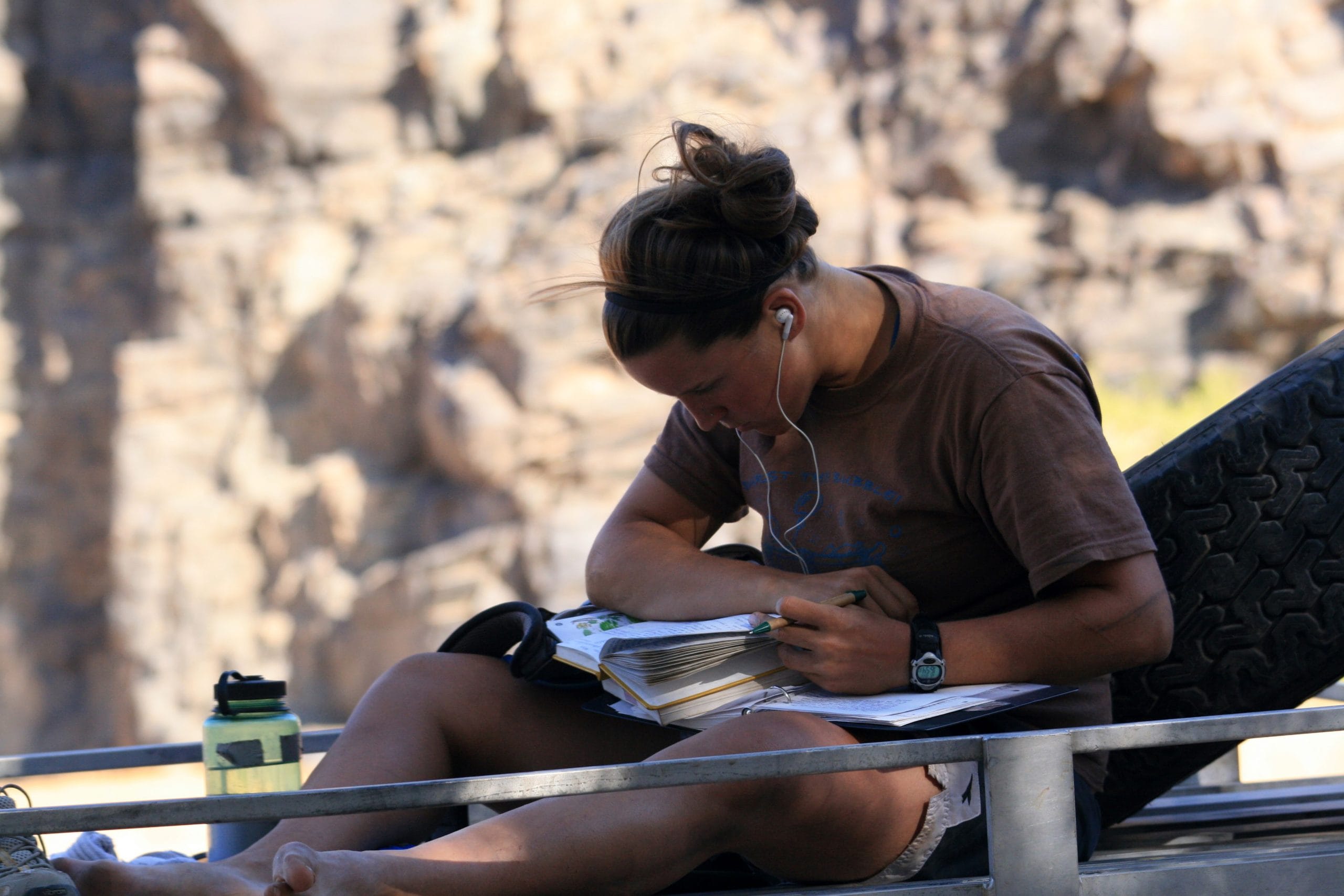
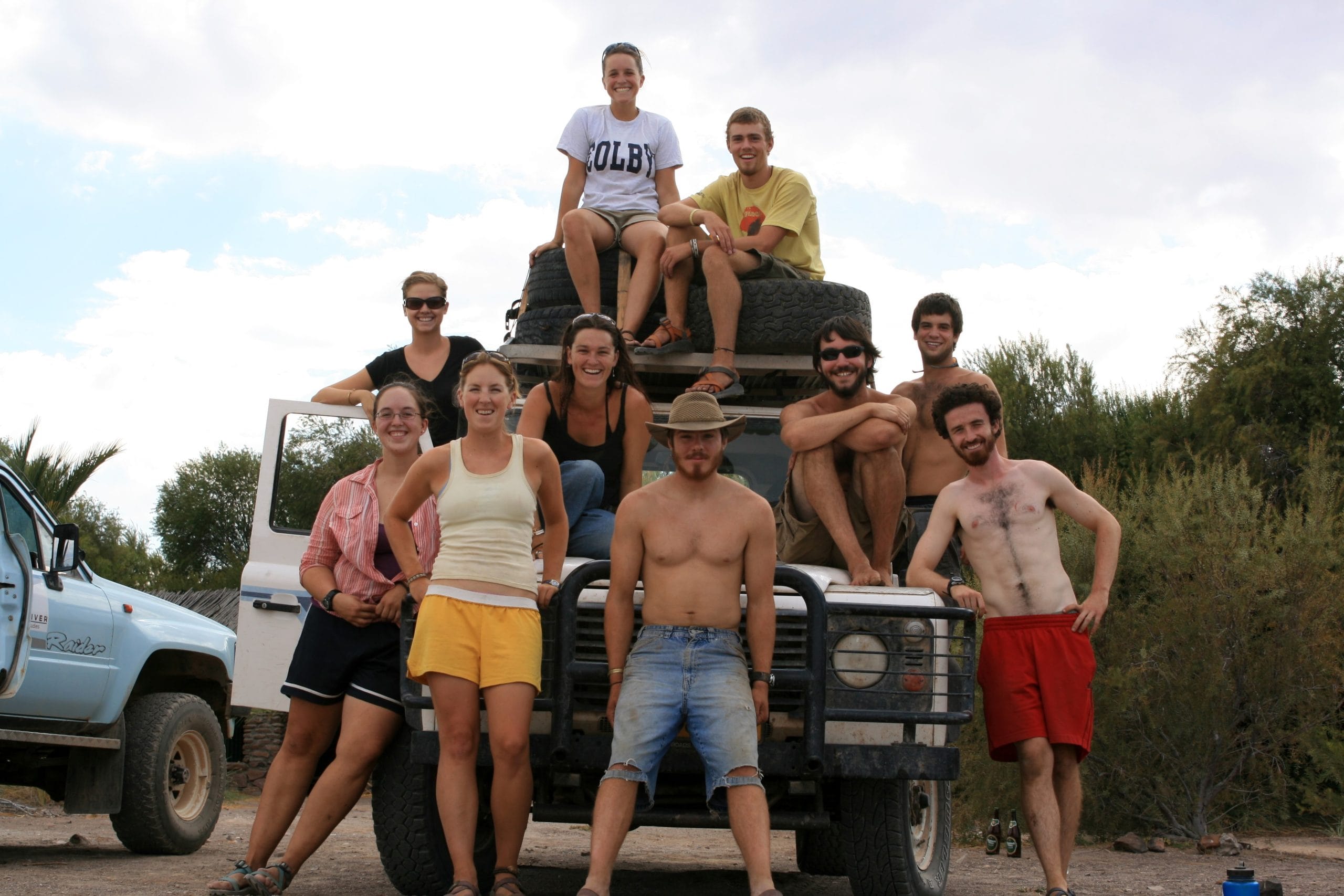
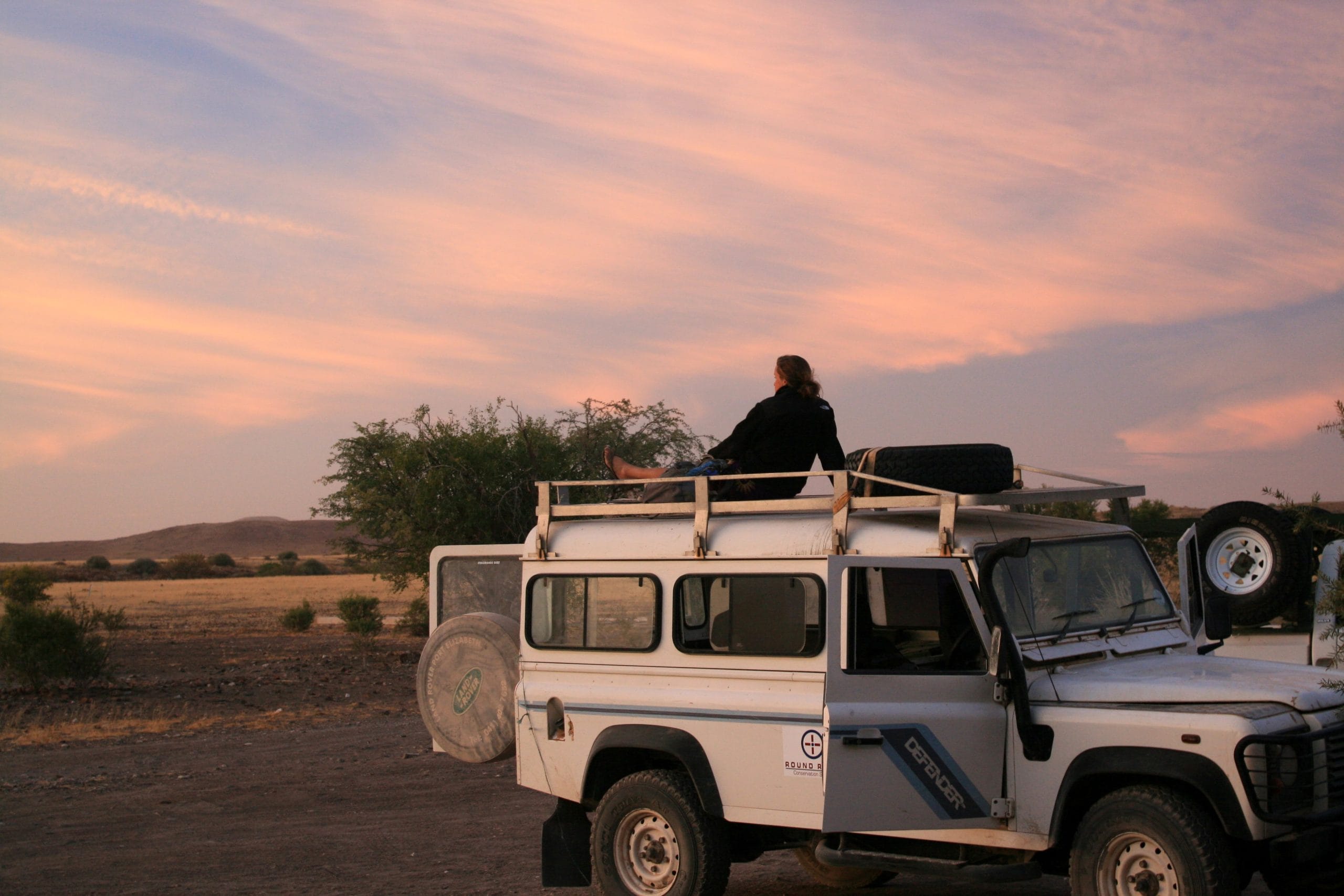
Orrick during her time in Namibia as a Round River student. Thanks to Kevin Cannaday, a fellow Namibia Fall ’08 alum, for these photos.
In 2015, she returned to Round River as an instructor, leading the Botswana student program through 2018. During this period, she was a key figure responsible for the development of community-based wildlife monitoring projects in the Okavango Delta. It is a time she remembers with great fondness. “I knew I was honing my skills in a way that felt really productive and really rewarding,” she reflects. “I was learning all the time.” Leading students every semester, she relished providing them the kind of holistic conservation education that had shaped her own thinking, opening their eyes to the inextricable connection between people, wildlife, and the land.
Transitioning into a Conservation Associate role with Round River in 2018, Orrick spearheaded research and conservation efforts in the Makgadikgadi region of Botswana while pursuing a Ph.D. at Yale School of the Environment. Her dissertation, which focused on understanding and mapping socio-ecological relationships in the Central sub-district of Boteti West, offered a first-of-its-kind look into the practices of people, wildlife, and cattle in the region. The project produced a nuanced understanding of the landscape, offering insight into coexistence strategies that balance human livelihoods and wildlife conservation.
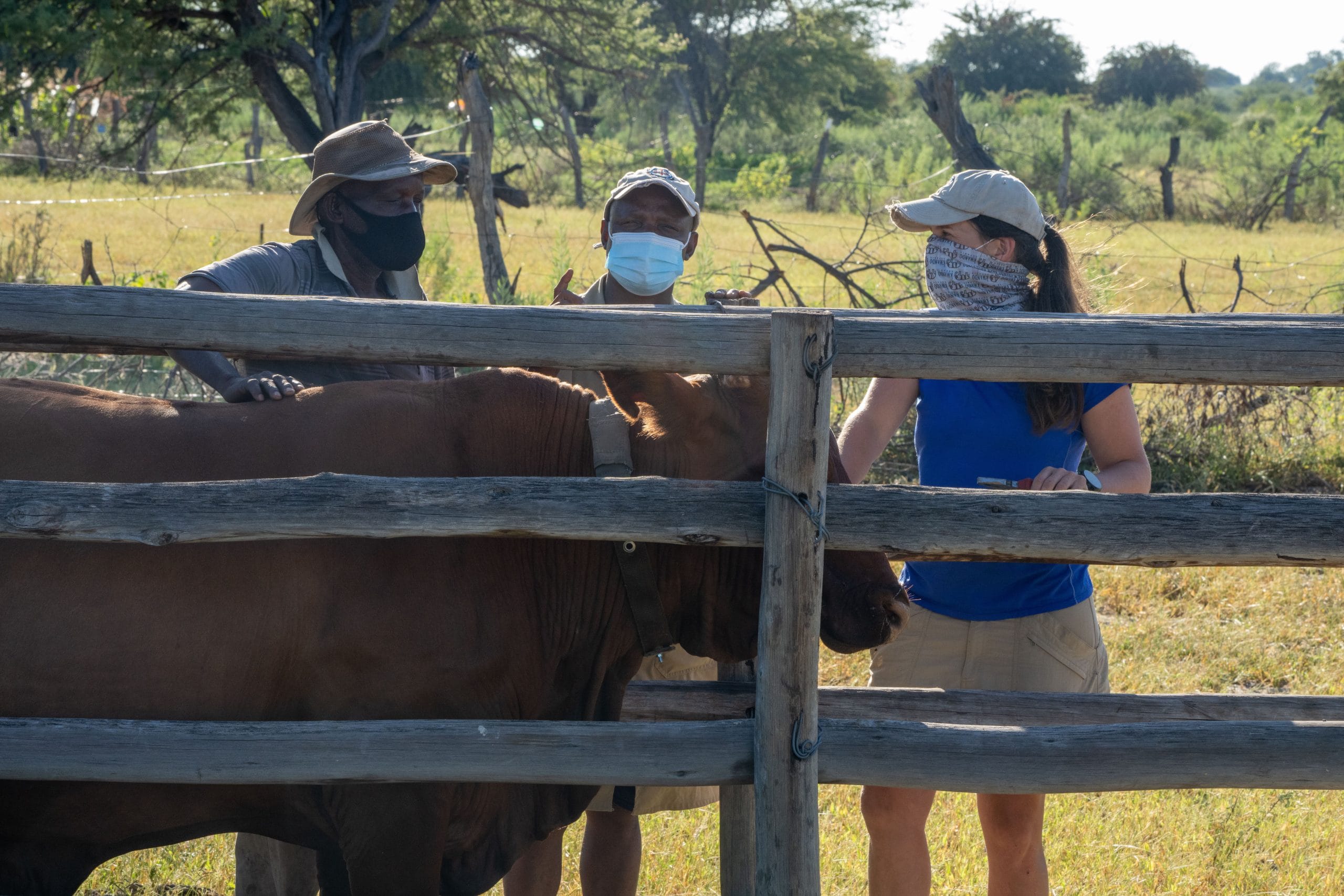
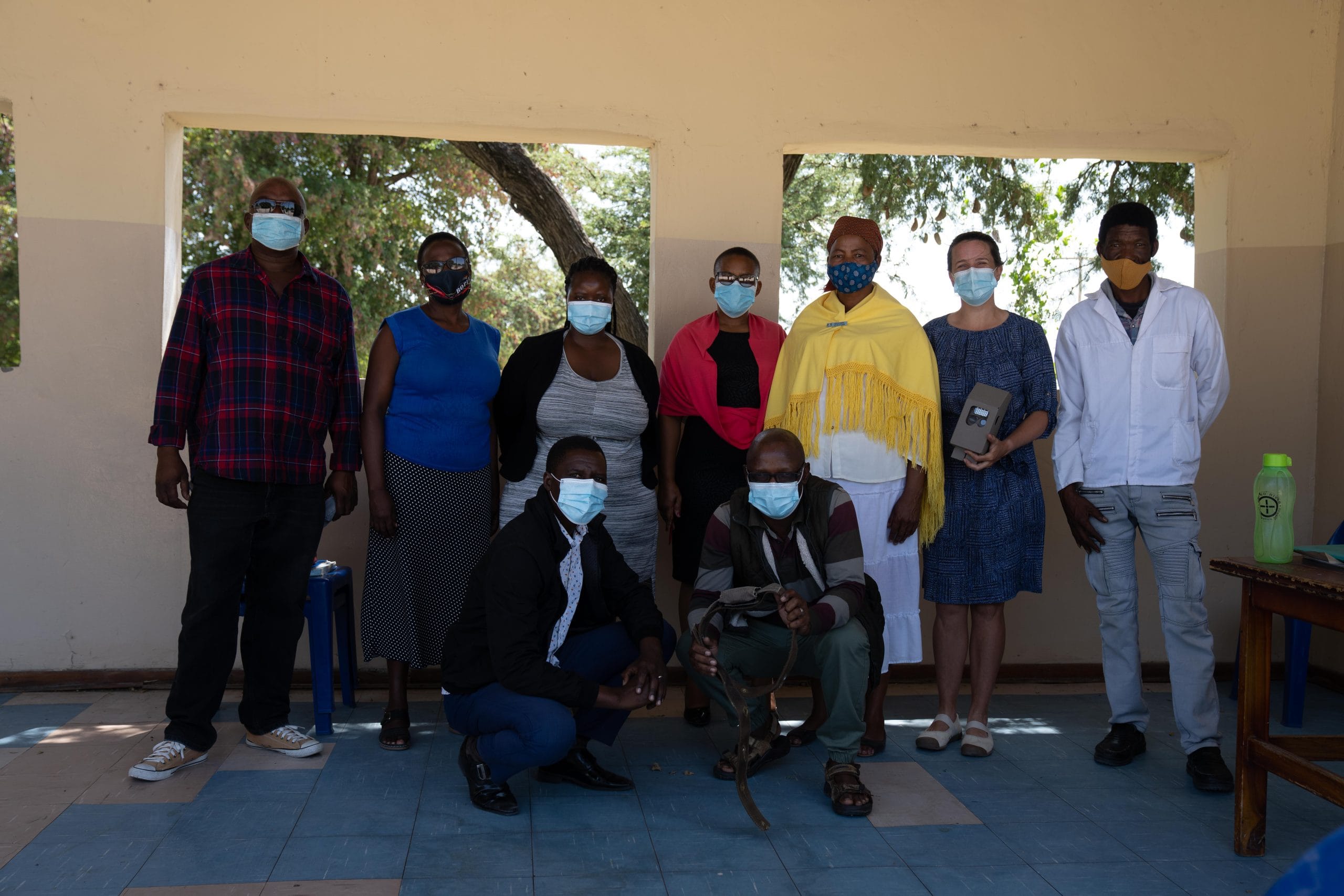
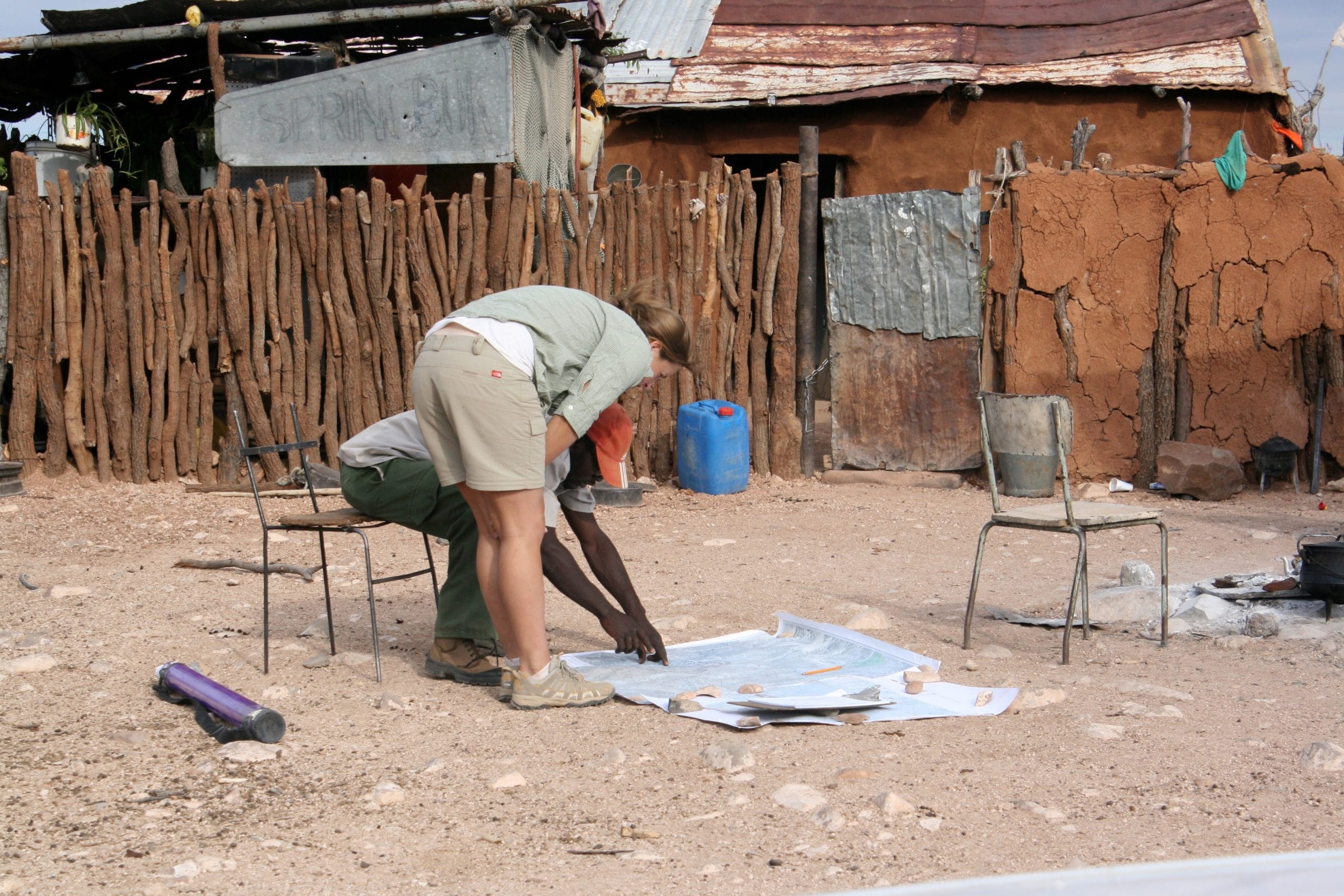
Orrick meeting with cattle ranchers and community members while conducting PhD research in Botswana. Photo credits: Dylan Feldmeier.
Now based in the American West, Orrick is applying her expertise to her home state, seeking to understand the social and ecological factors that accompany the return of grey wolves to California. Since the first dispersing wolf arrived in 2011, wolves have been naturally recolonizing California from neighboring states, putting pressure on ranching communities and raising questions from the public. While the return of wolves presents a unique opportunity for ecological restoration, the question of how humans and wolves will share space in a state with dense human populations, limited native prey, and widespread cattle grazing remains unsettled.
However, it is exactly the kind of research question that Orrick is used to tackling. “We can’t think about single species,” she says. “We have to be thinking about an entire ecosystem — and about people.”
Under her direction, and Principal Investigators, Dr. Arthur Middleton and Dr. Justin Brashares, the California Wolf Project, an initiative of the University of California Berkeley’s Wildlife Program, is bringing together a broad coalition of scientists and stakeholders to advance science-based conservation and management of wolves. The project is establishing foundational baselines for wolf ecology in California, including mapping habitat use, predicting occupancy, and analyzing diet, while also examining the human dimensions of wolf recolonization. The initiative is also deeply committed to outreach and storytelling, engaging and informing stakeholders while documenting the unique recovery of this species in all of its complexity.
Now, as a National Geographic Explorer and Grantee, Orrick will be expanding the project’s scope to include research investigating the bi-directional influence of wolf and human movement on the landscape. By combining movement data from GPS-collared wolves with participatory mapping and in-depth interviews with cattle producers, Orrick hopes to understand how ranching practices are shaping and being shaped by wolf behavior. Her research, which is funded through 2027 by the National Geographic American Keystones Initiative, will open up new insights into the dynamic between wolves and ranchers, providing context for ongoing planning around coexistence.
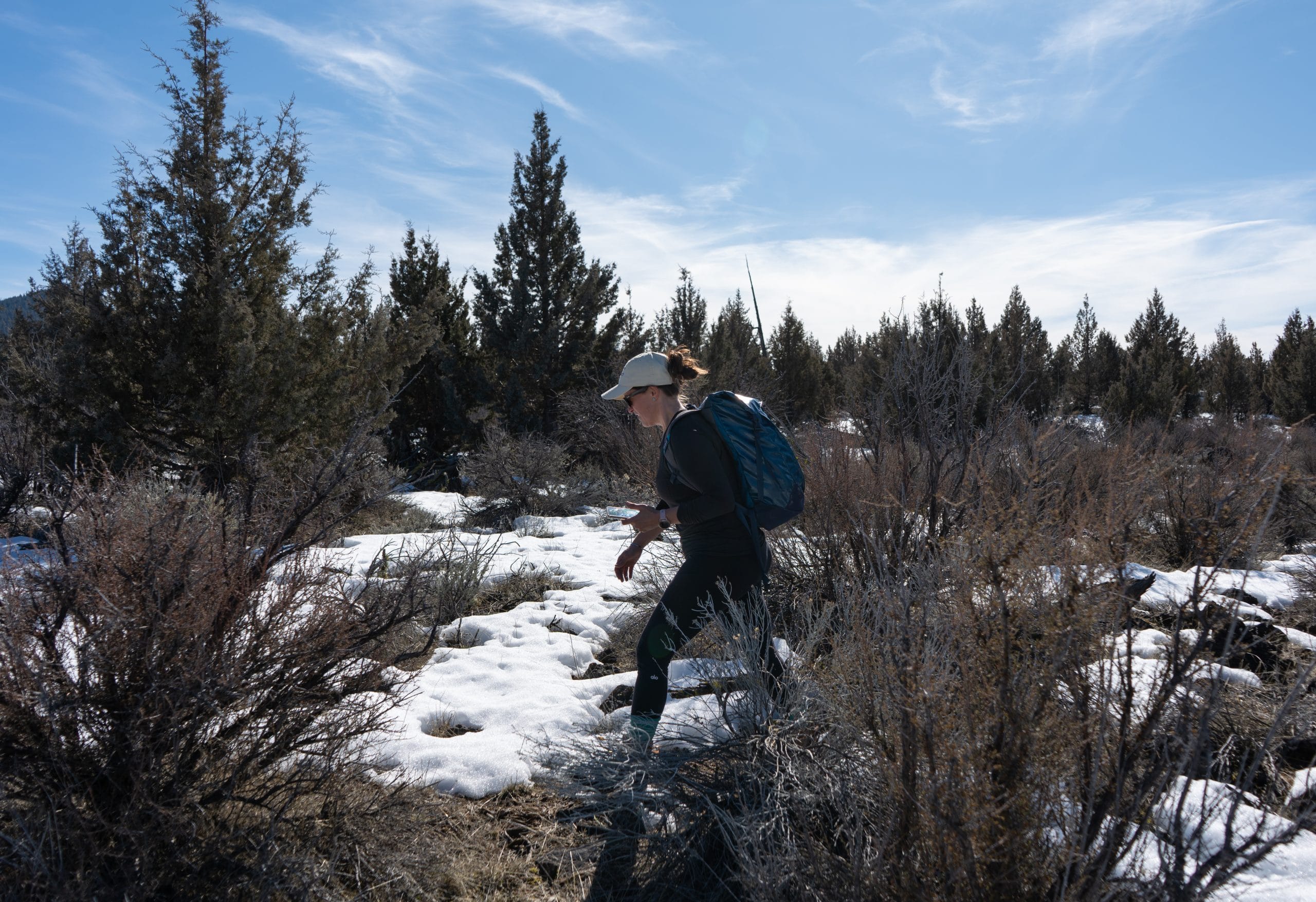
Orrick in the field conducting research with the California Wolf Project. Photo credit: Malia Byrtus.
Beyond research, Orrick has been a central figure in statewide working groups considering how ranchers and Californians can live alongside wolves. It has meant learning a whole new world of policy and politics — and yet, Orrick notes, Round River prepared her for this too. The ability to move fluidly between field research, stakeholder meetings, team management, and interacting with government agencies is something she traces directly to her years as an instructor. It is, she adds, “definitely one of the reasons I got this job.”
Orrick now remains connected to Round River as a board member, a role that she is excited to use to help shape the organization’s next chapter. She speaks passionately about the impact that Round River has had in her life and her hopes to continue providing students with opportunities to get into the field and learn about community-centric conservation.
“My life changed through Round River,” she says. “That is not hyperbole. It really did shape my career.”