

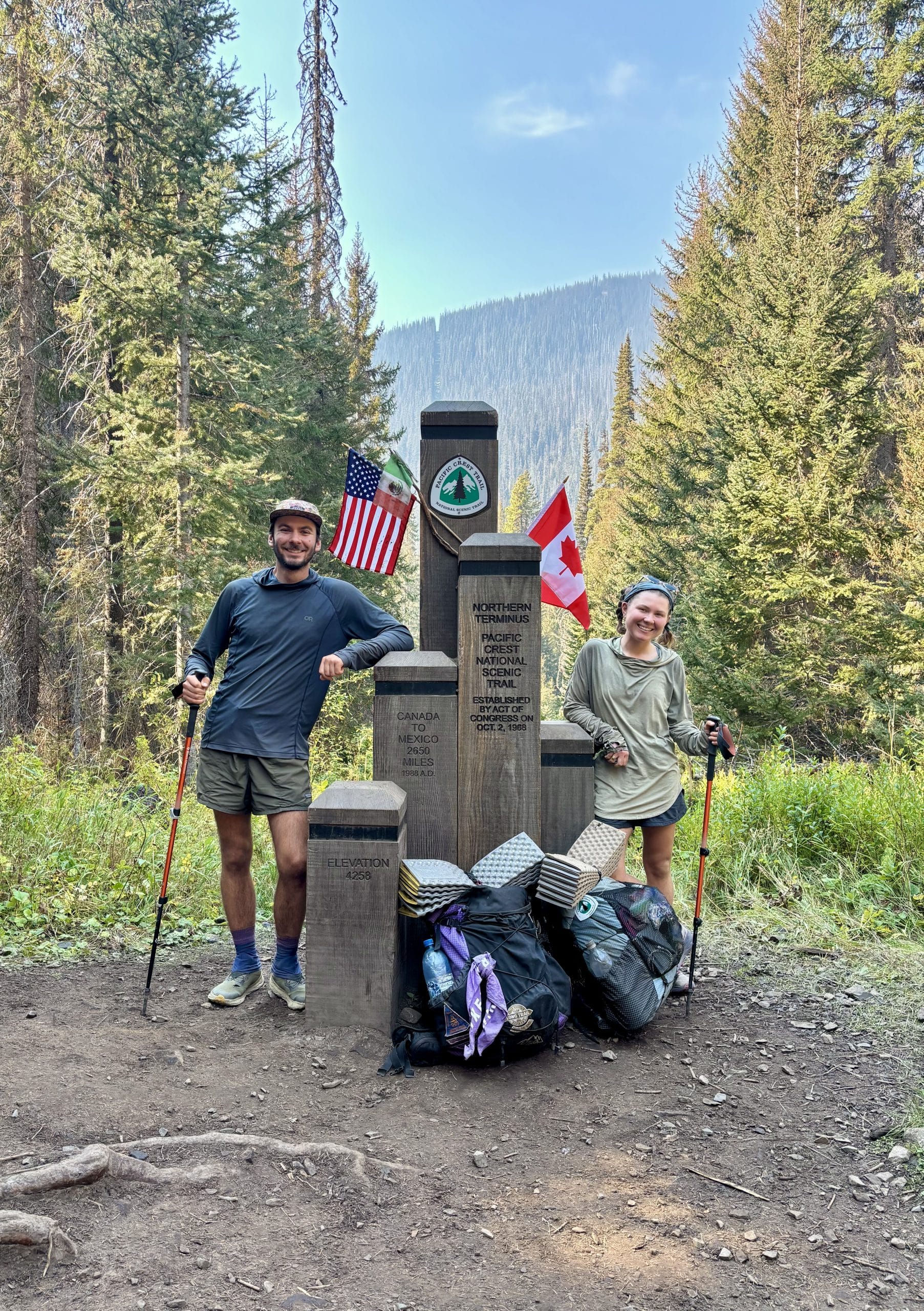
Gabe Falcione completed the Taku Summer ‘23 program where he researched ecological succession in response to glacial recession. Emily Rothe was a student on the Patagonia Spring ‘23 program where she did a project on LAC (Least Acceptable Change) for trail maintenance in the Patagonia National Park. This past summer, the pair hiked 2,255 miles of the Pacific Crest Trail over 115 days, averaging 20 miles per day on the trail. Gabe shared what their experience was like:
In May of 2025, a few days after walking across the stage at graduation and packing up our lives in Burlington, Emily and I drove to my house in California to do some last minute preparations for the trail. Within a week of graduation, we got dropped off at the 400 mile marker outside of LA so that we could keep on track with the rest of the thru-hikers who started in April. The desert was immediately brutal. Intense heat and long stretches without water meant hiking between 11am-3pm was too dangerous, so we got up early and hiked into the cool night for the first few weeks. Once we got into the Sierra Nevada mountains, the scenery immediately changed with steep granite slopes, snow, mosquitoes, and pines. New fears emerged like the dangerously steep and snowy passes we would traverse each day. There was a straight week where we ate dinner in headnets and raingear as we cowered from the clouds of mosquitoes. But despite the six-legged horrors ready to greet us in our vestibule the next morning, we were always ready to pack up camp and continue to see some of the most beautiful fields of scree or bone-chilling alpine lakes. It was during this time where the trail began to remind me of my time in the Taku. Many of the flowers we encountered I was able to identify like a language I had once forgotten that just as easily came back. Alpine lupine, yarrow, stonecrop, saxifrage, paintbrush, and fireweed were a daily sight.
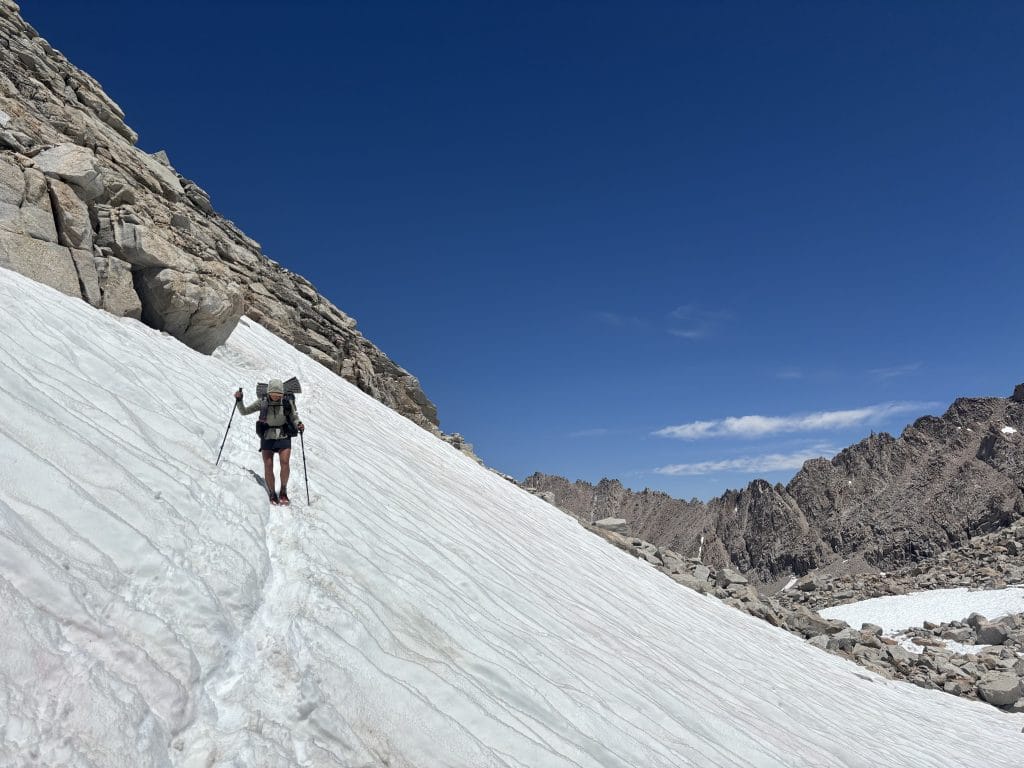
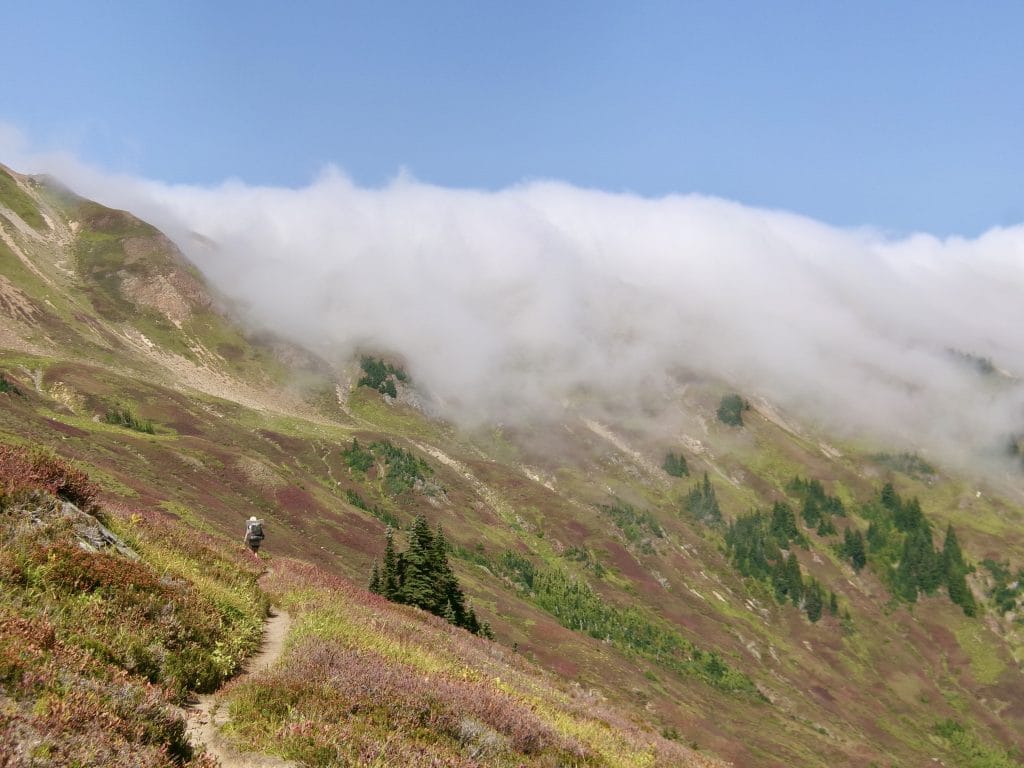
Traversing steep, snowy slopes and beautiful alpine meadows.
One night before bed, I was startled by a familiar sound – “peeent”. I immediately was reminded of each night before falling asleep in the Taku, with nightjars singing their sweet call. I was so surprised because I didn’t know they lived this far south but it wasn’t long before we would hear them occasionally at dusk through the entire trip. If a single species could summarize the Taku, it would be the nightjar. Their calls were always a comfort after completing my readings for the night and going out to the firepit to relax. I recall writing my blog post on my experience doing nightjar surveys outside of Atlin. In a sense, Round River was the one thing that prepared me most for the trail. I had done some solo backpacking trips, but living out of a tent for 6 weeks in the Taku made me very comfortable being out there for a long time.
After a month on trail, things started to fly by. Northern California had its challenges considering the large burn zones from the Dixie Fire, but the beauty remained unescapable. One of the most unforgettable moments on the trail was seeing Mt. Shasta for the first time. The second largest mountain in the Cascade Range, it loomed over all its surroundings, snow capped and alone. We were able to see this mountain for the next 200 miles of hiking and even through the smoke in Oregon. Crossing that first border was a rejuvenating moment for us and I was more than excited to continue up the Cascade Range and see more spectacular peaks such as Shasta. Oregon felt even faster than NorCal, the terrain forgiving and weather more than favorable. We were able to push some of our highest mileage days there, flying through gorgeous areas such as the Three Sisters Wilderness and Mt. Jefferson Wilderness. When we reached Mt. Hood, we were able to meet up with our friends from school, Kate and Isabel, who did 4 days on trail with us until the Washington Border.
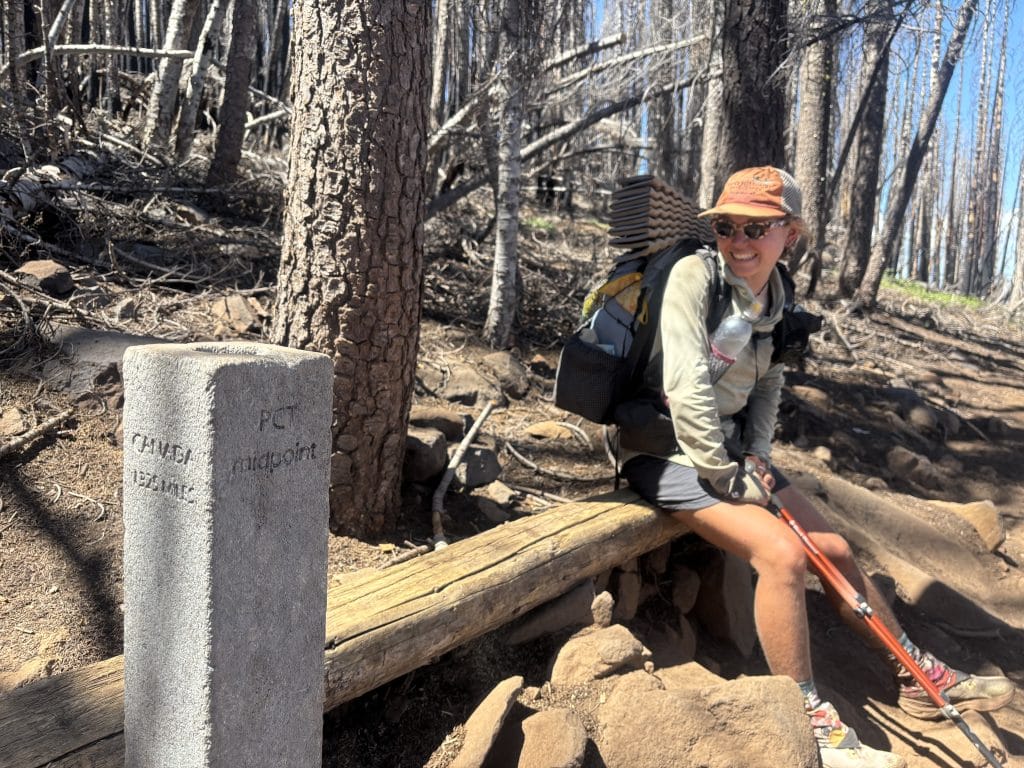
Emily at the PCT midpoint marker in Northern California.
After resupplying in Portland, Emily and I continued our trek across the Columbia River and into the Evergreen State. The terrain was reminiscent of the Sierra, with steep ascents and heavy packs. After a few days, we were greeted by intense smoke, and began to worry that our luck involving fire closures was wearing out. After getting into town, we learned that the fire was ahead of us, but we would need to skip around Mt. Rainer in order to avoid it. Although we were bummed about skipping a beautiful section of trail, we were happy to be out of the smoke and continuing our hike. The last week of the trail had its way of telling us the end was near; drenching rain and colorful foliage meant our summer was coming to an end. On September 19th, we reached the Canadian Border after hiking for 115 days and over 2,200 miles. Although the terminus was full of many groups of people, there was an overwhelming silence from all. I really couldn’t tell you what it felt like sitting there; completing a life long goal like this that seemed so far out of reach left me in disbelief that we’d accomplished it.
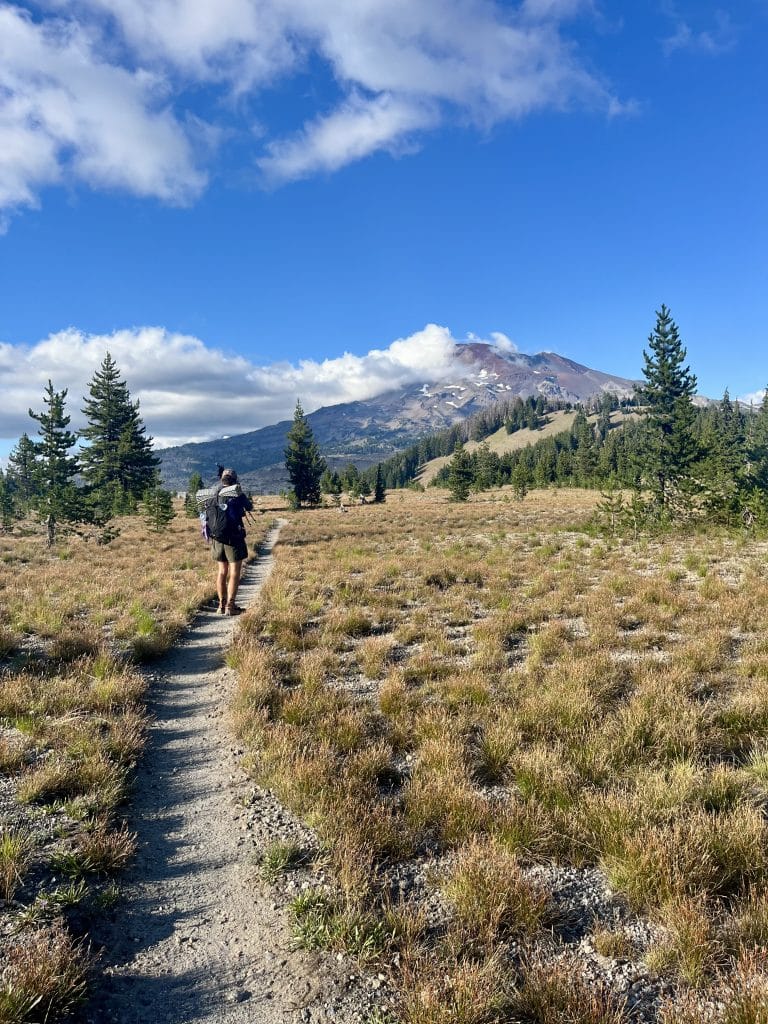
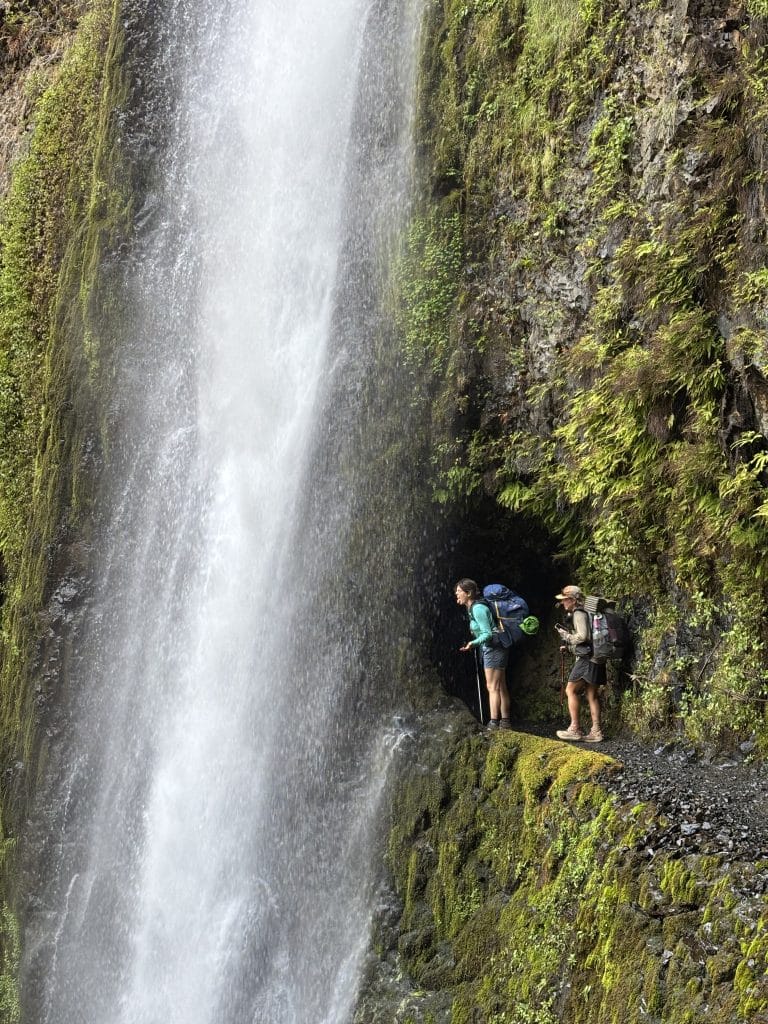
Moments on the trail.