
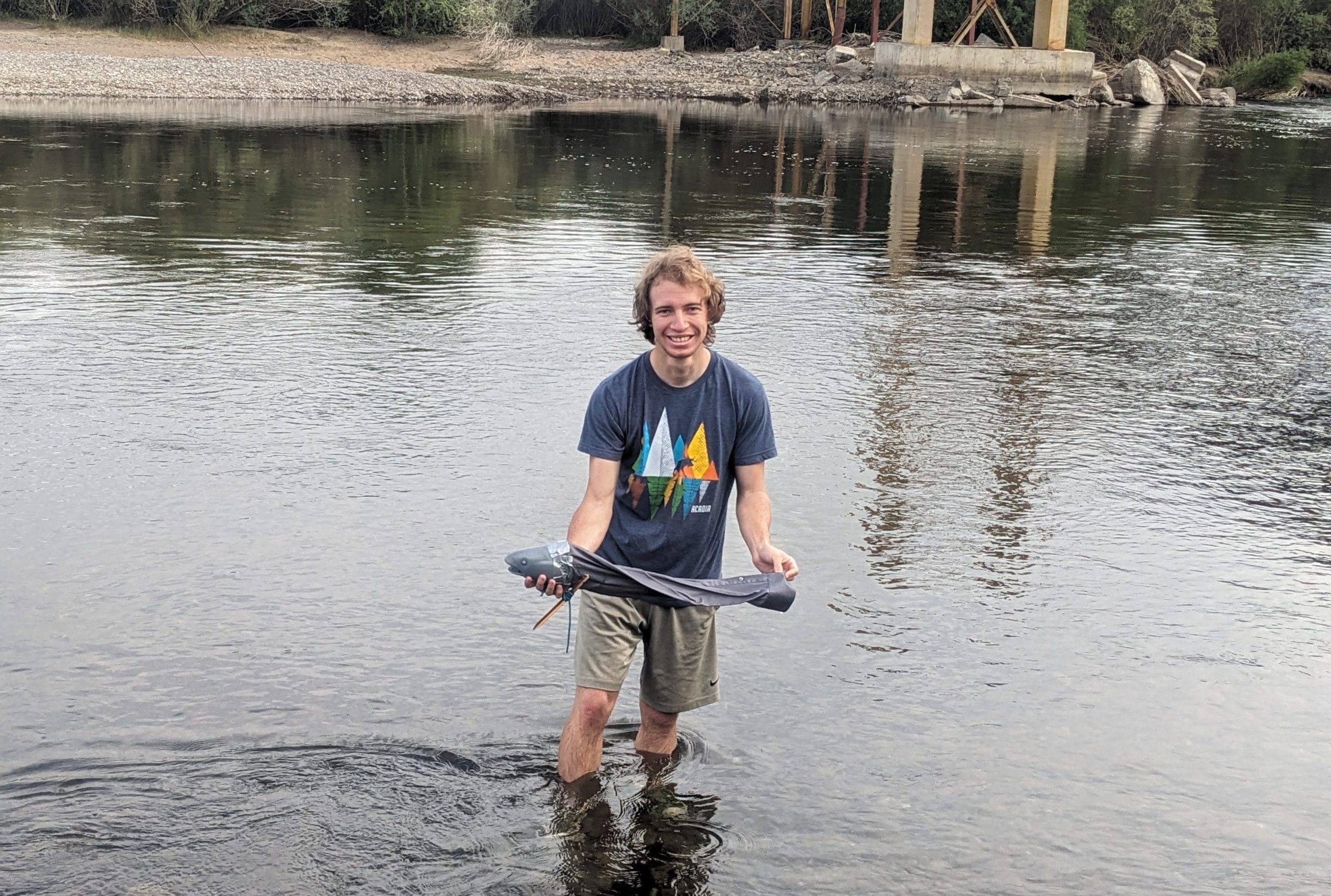
TJ in Mongolia this past summer, testing out research methodologies for a study on taimen (Hucho taimen) as part of his role as an Assistant Instructor. Photo: C. Smith
by TJ Guercio, Mongolia ’22
I had the incredible opportunity to return to Mongolia this past summer as an Assistant Instructor for the Round River Conservation Studies Mongolia Summer 2025 program. As a student on the program in 2022, I had an amazing experience and learned a lot from our research and coursework. However, I gained a whole new perspective as an instructor. Going behind the scenes, I saw the incredible logistical challenges and all of the work the instructors do. I was also able to see just how much this program means for the students.
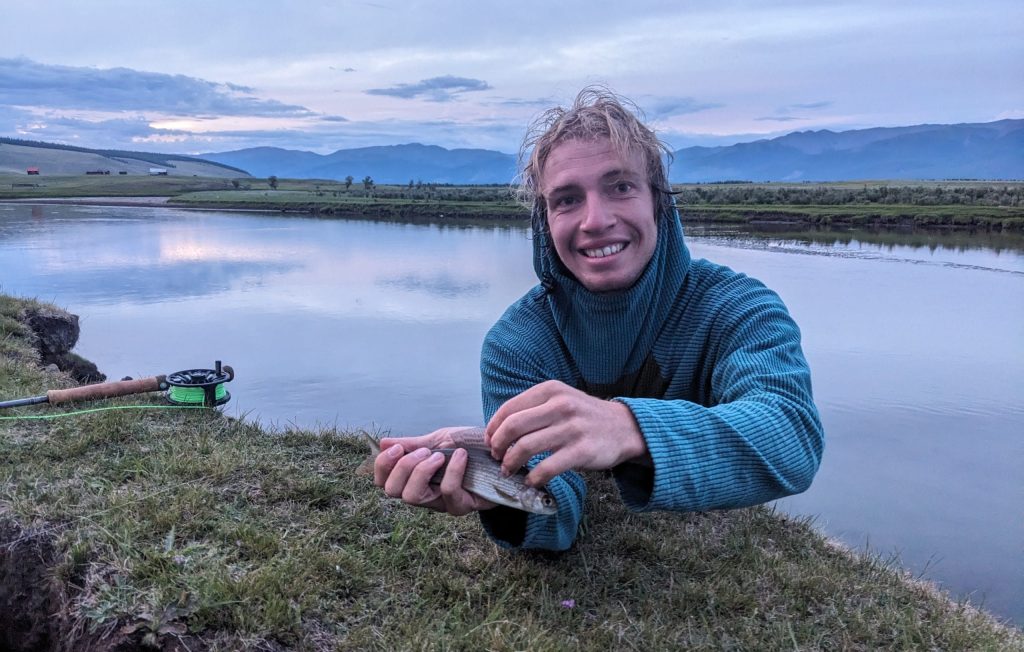
TJ with a fish he caught while fly fishing in the Darhad. Photo: C. Smith
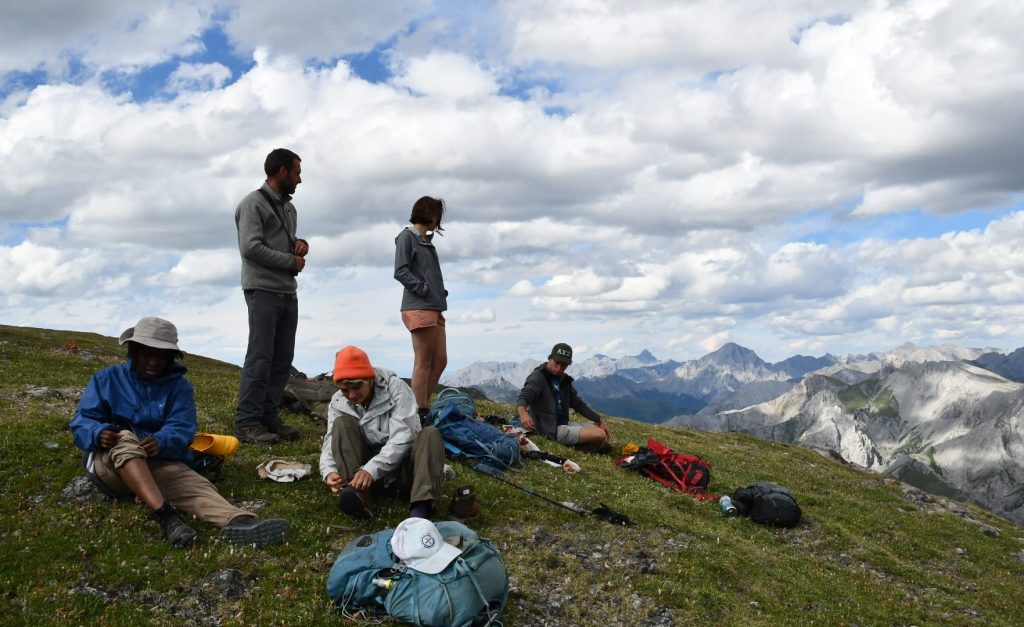
TJ (far right) and other members of his Summer 2022 Mongolia cohort, taking a rest while out completing fieldwork in the Darhad Valley. Photo: G. Goodwin
This year, many students joined the program who had very little backcountry experience. Some of them had never been camping before or had never hiked up a mountain. While this definitely brought some challenges, it was also rewarding to see the students grow, learn, and foster a love for the outdoors. As an assistant instructor and a former student myself, I had a unique perspective and was able to be the bridge between the instructors and the students. I remembered and shared many stories about my time on the program, and those insights allowed me to relate to and assist the students in a significant way. Tight friendships form on these trips, and I was able to see my students go through the different stages of getting to know each other. Because I had been through that experience myself, I was able to foresee some issues and address them before they became bigger problems.
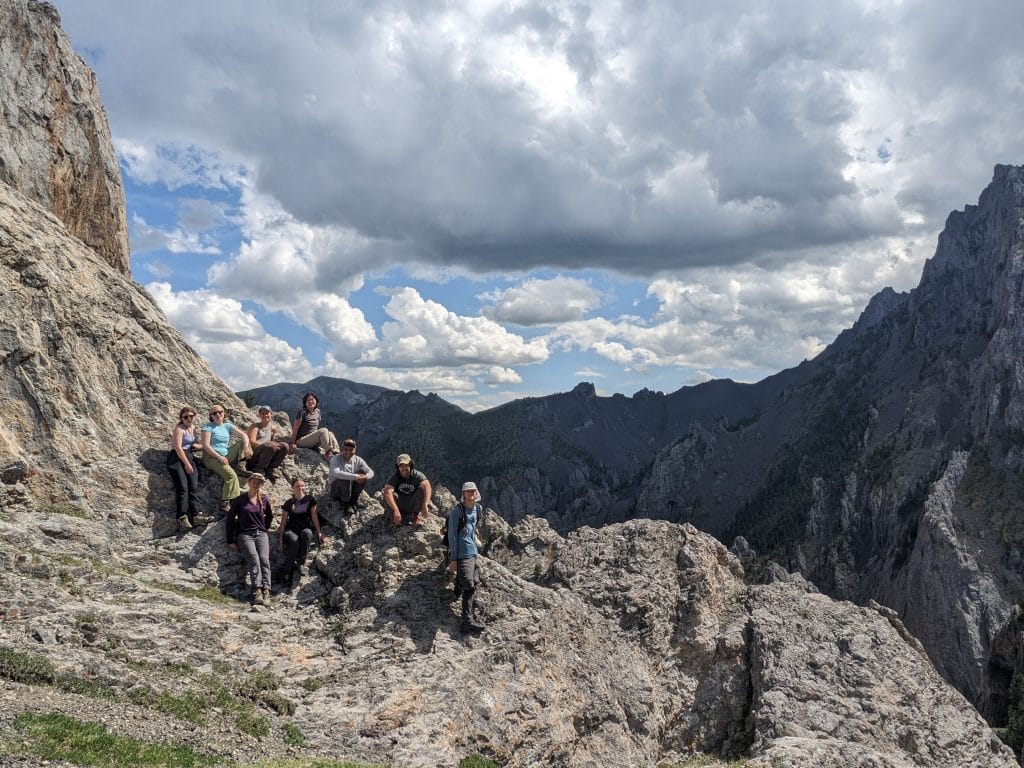
The Mongolia Summer ‘25 cohort. Photo: C. Smith
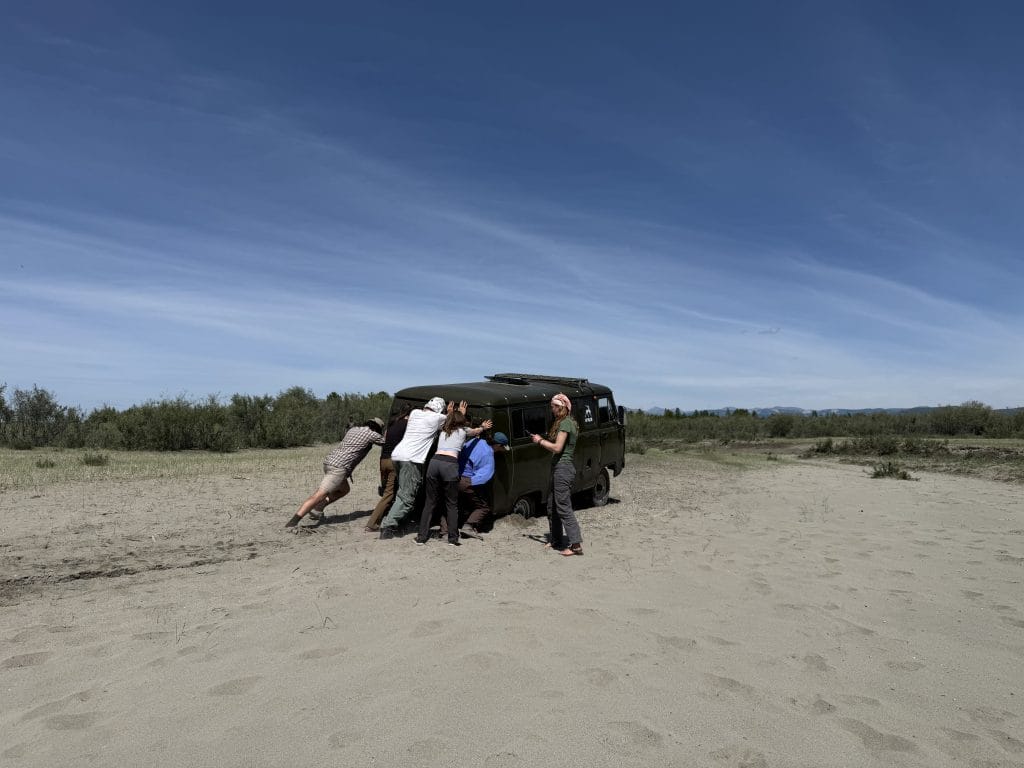
Students on this past summer’s program learning the meaning of ‘type 2’ fieldwork fun. Photo: TJ Guercio
What was most exciting to me was seeing the students take control and responsibility for the research projects themselves. I was assisting on all of the projects, and there was a lot of work to be done cleaning and interpreting all the data we collected. But as the summer went on, it was amazing to see how much the students started to care and become invested in the research. Each student took initiative to apply their own creative ideas and ways of thinking to their projects, and those personal touches made our research even more applicable and important. This year, students applied complex mathematical equations to our vansemberuu (snow lotus) transects, precisely calculating the area that we surveyed for this endangered, culturally significant plant. They also interviewed elders about traditional medicines and knowledge, rode reindeer, wrestled at Naddam (an annual festival celebrating Mongolian culture), and analyzed plants for their medicinal chemical properties. None of these projects would have been completed without the unique passions and skills from these students.
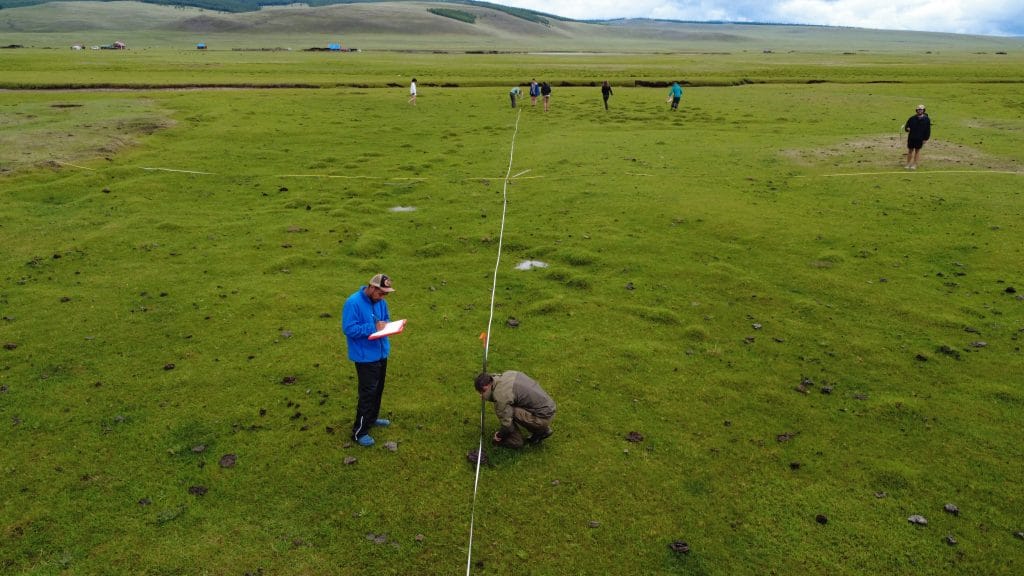
Students and instructors setting up research plots to survey for Daurian pika. Photo: TJ Guercio
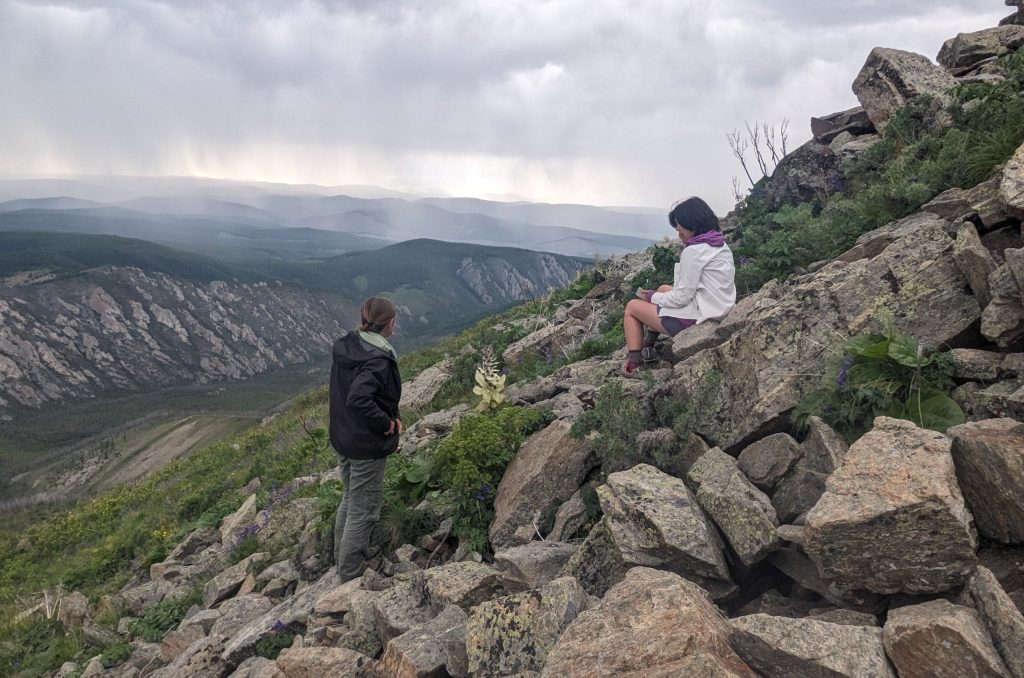
Students surveying for Vansemberuu (snow lotus), a culturally significant medicinal plant experiencing pressure from poaching. Photo: C. Smith
This experience reinforced my love of conducting community-driven field research, but also sparked an interest in teaching. I hope to continue working in the Darhad Valley with RRCS in the future. I am particularly interested in continuing to develop a taimen study in the Tengis and Shishged Rivers alongside park rangers. I have always been interested in fisheries management, and worked as a fisheries technician for Colorado Parks and Wildlife. I hope to apply these skills, and continue building the relationships and connections I have in the Darhad. In collaboration with RRCS, I plan to turn this project into a PhD. Right now, I am applying for funding and admission into interdisciplinary graduate programs that would support this work. In a few years, I foresee myself collaborating with local park rangers and discussing conservation management plans in Mongolia as I advance my career as a conservation biologist.
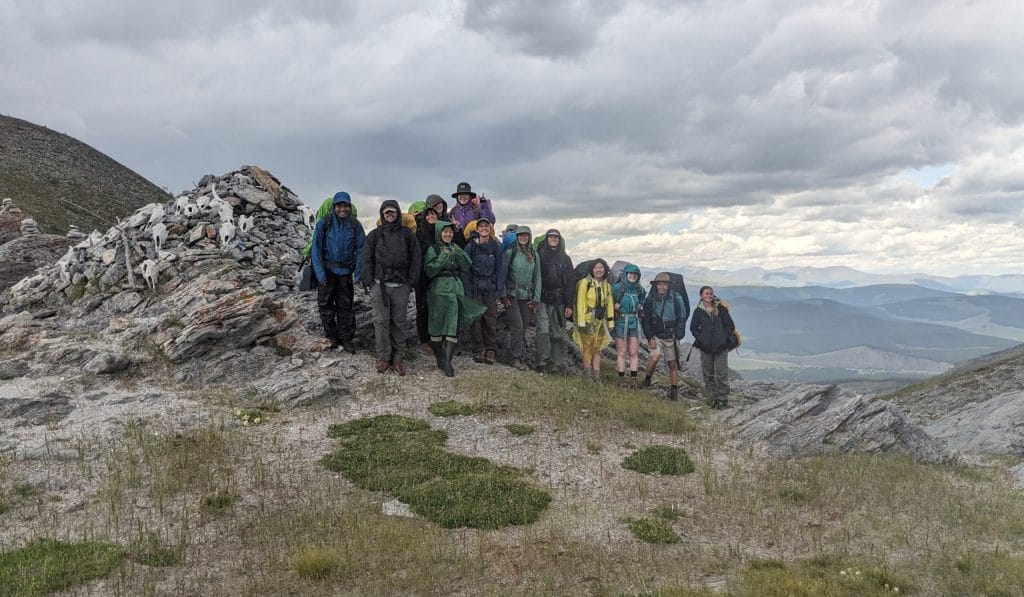
TJ and the students he helped lead. Photo: C. Smith